

How to Improve Your Street Photography
Street photography has always fascinated me, it’s essentially what made me pick up a camera when I was younger. It’s unpredictable and full of tiny moments, documenting everyday life and finding beauty in the little details around us that ultimately gives you a deeper connection with a place.
Whether I’m wandering through the streets of Japan or walking to my local coffee shop at home, I’ve learnt that the best street photos aren’t about perfection, they’re about being present.
Over the years, I’ve made plenty of mistakes, missed incredible shots, yet I have also been in the right place at the right time to create some of my favourite images. Here are some of the lessons I’ve learned that might help you elevate your own street photography.
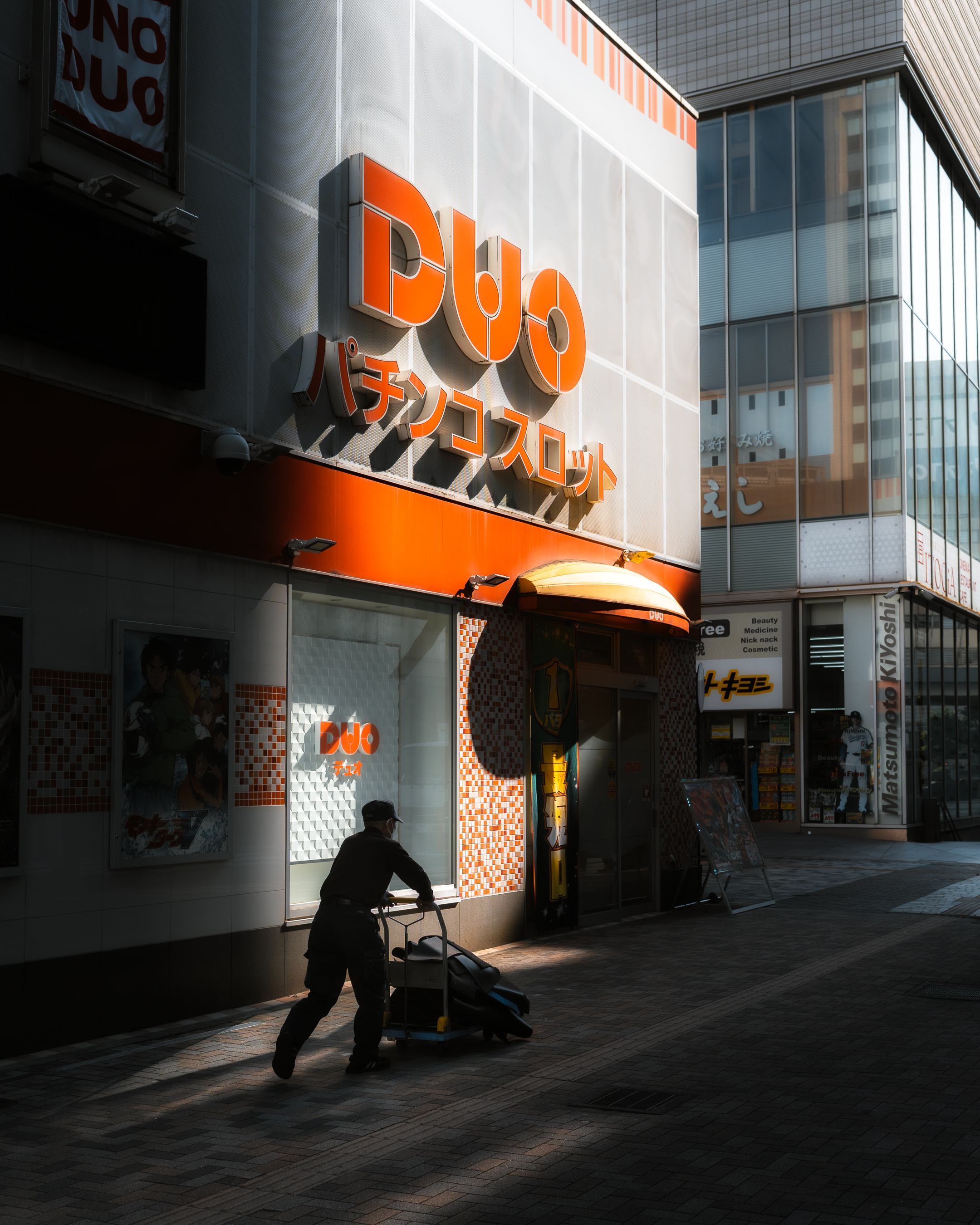
Sony A7CII & 24-50mm F2.8 Macro G | 1/1600 sec | f/4 | ISO 320
Understand Your Camera
In street photography things move fast. Take it from me, I’ve missed so many shots over the years from fumbling around with my camera settings. Take advantage of Sony’s customisation options so you can adapt to the situation at the click of a button without looking at your camera. I am a huge believer in setting your camera up to do all the hard work for you, taking away the stress of figuring out your settings in the moment so you can focus on documenting what’s in front of you. I’m by far the most technical photographer and all I’m thinking about while in the streets is composing whatever is unfolding in front of me.
My go-to settings for my Sony camera are:
Aperture priority mode - Allowing me to adjust my aperture to control the depth of field in an image while the camera will automatically adjust the shutter speed for me to maintain correct exposure.
Auto ISO with a minimum shutter speed of 250 - Having a minimum shutter speed set will not allow my camera to go any lower than the set limit making sure my image is in focus and sharp. This can be changed accordingly, depending on the situation or what kind of image I am trying to achieve.
Touching on ISO, I remember starting out and shooting everything at f2.8 and ISO 100 because that’s what I thought was correct but I believe ISO is a huge myth. Obviously it’s best to take advantage of the light on offer but don’t be scared to crank this up if needed. I’ve recently shot images up to ISO 10000 and they have still been usable. I’ll say it again - use the tools available and focus more on what’s going on around you. Lightroom denoise and other platforms can do an incredible job of removing noise from an image.
Exposure compensation - Every scene is different and while your camera may tell you that you are exposed correctly, that might not always be right. For instance, if I am shooting a high contact scene, where you have harsh highlights and dark shadows, I might choose to dial down my EV to -0.7 to preserve the highlight details.
- Permits your camera to capture a burst of images while you hold down the shutter allowing you to select the best image afterwards.
In street photography things move fast so I will always have this set to Hi but if I really don’t want to miss a shot or I am dealing with a fast moving subject then I will use Hi+ if needed.
AF-C - Auto Focus Continuous - Allowing the camera to constantly update the focus within my autofocus point, 95% of the time here I will use Spot Focus.
Focus tracking - I have ‘Track On’ + ‘AF On’ customised to my ‘AF-ON’ button. This allows me to select my subject within my spot focus zone and as long as I am holding that button, my selected subject will be in focus whenever it is in my frame. It allows me to track a subject and reframe my composition to keep the subject in-focus. An incredibly handy tool when working in busy fast-paced environments to save you those vital seconds and that can be the difference in walking away with a well framed, in-focus shot.
APSC Crop mode - This gives you a 1.5X crop in-camera helping you get that extra distance when needed. It’s incredibly handy when shooting on a prime lens to essentially give you two focal lengths and even with a zoom lens to give you an even longer focal range. I use this all the time and it is great when shooting on my FE 24-50mm F2.8 G lens as it essentially gives me a 24-75 in a package that is half the weight and size of my FE 24-70mm F2.8 GM II.
As mentioned previously, I am by far the most technical photographer, I let the camera do the work so I can concentrate on documenting what is in front of me.
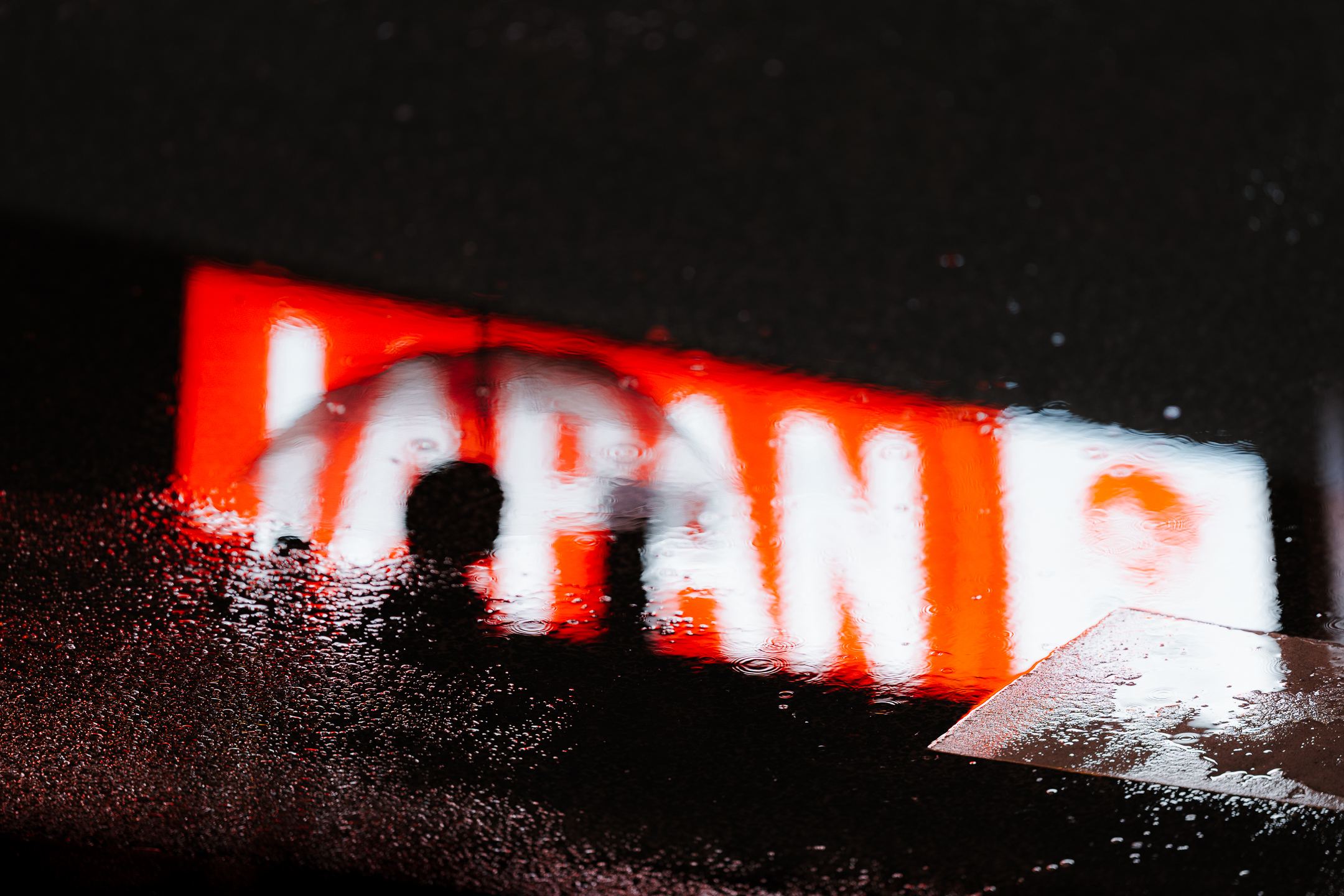
Sony A7CII & 85mm GM II | 1/640 sec | f/1.4 | ISO 400
Learn to See Before You Shoot
When I first started, I thought improving my photography meant upgrading my gear. But I quickly learnt that the real improvement happens in your eyes, not your equipment.
Walk through your city and observe, look for how harsh shadows and highlights create pockets of light, how light bounces off windows to create reflections, how people move through the space & how colours interact. The more you train your eyes to notice these little details, the more your camera becomes an extension of your vision.
I often find the first hour of a shoot takes me a while to get into the swing of things and find a rhythm. Take this time as a warm-up like you would before playing sports. Getting out there with your camera in hand is the hardest part, like anything in life, you just need to start. Take your time and ease into the session, if you walk away with a good image straight away then that’s a bonus but take your time to observe your surroundings and do a few loops of the area. Your first few images might not be anything special but start clicking that shutter and before you know it, things will start falling into place and interesting stories will start to unfold. Remember to think of each image as a story, take the shot but what else can you see in that scene that will help piece a story together from the first image, remember to grab the wide shot, mid shot & detailed shots.
Don’t be scared to try something different, use a slower shutter speed, try different angles, use leading lines, reflections and shoot through objects to create layers. There are no rules here, try things and if they don’t work out, they don’t work out but at least you tried. This is the magical thing about photography and videography, we can never be too good, there is always room to learn and improve.
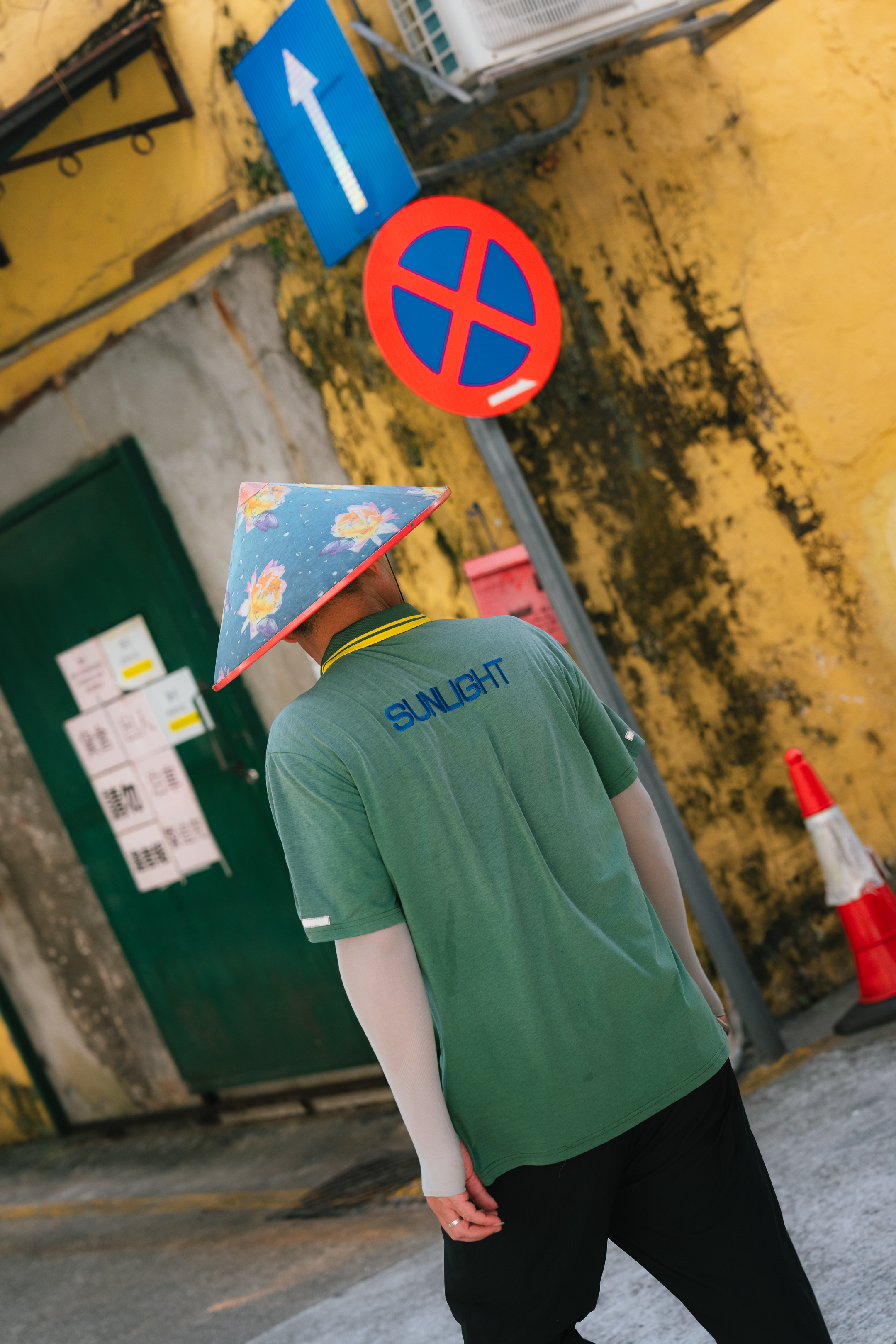
Sony A1II & 24-70mm F2.8 GM | 1/400 sec | f/4 | ISO 320
Get Comfortable Being Uncomfortable
Street photography can be intimidating. Pointing a camera in public spaces takes courage and respect. Early on I used to hesitate and be worried about intruding but I realised that when you move with genuine curiosity and kindness people respond differently.
Sometimes I’ll smile or nod before raising the camera, other times I’ll blend in and shoot candidly. Both approaches work but the key is intent. If you’re photographing with empathy it will show in the final image.
Over time you’ll build confidence. The more you shoot, the less self-conscious you become. Eventually you’ll find that moment where everything aligns and you’ll forget anyone else is around.
These days, I very rarely shoot directly into people front on, I like to use people to have a human element in the scene but I’ll either have a silhouette or their back to me. This also takes away the feeling of being uncomfortable as you’ll have no eye contact from people and are not invading their privacy.
There are many other ways to blend into a scene, try shooting from your waist, not only is this a nice perspective in the final image but people don’t see you looking through the back of a camera and for those times when you are looking through the back of your camera and catch someone looking at you more, move the camera around as if you are photographing something else in the area such as a building.
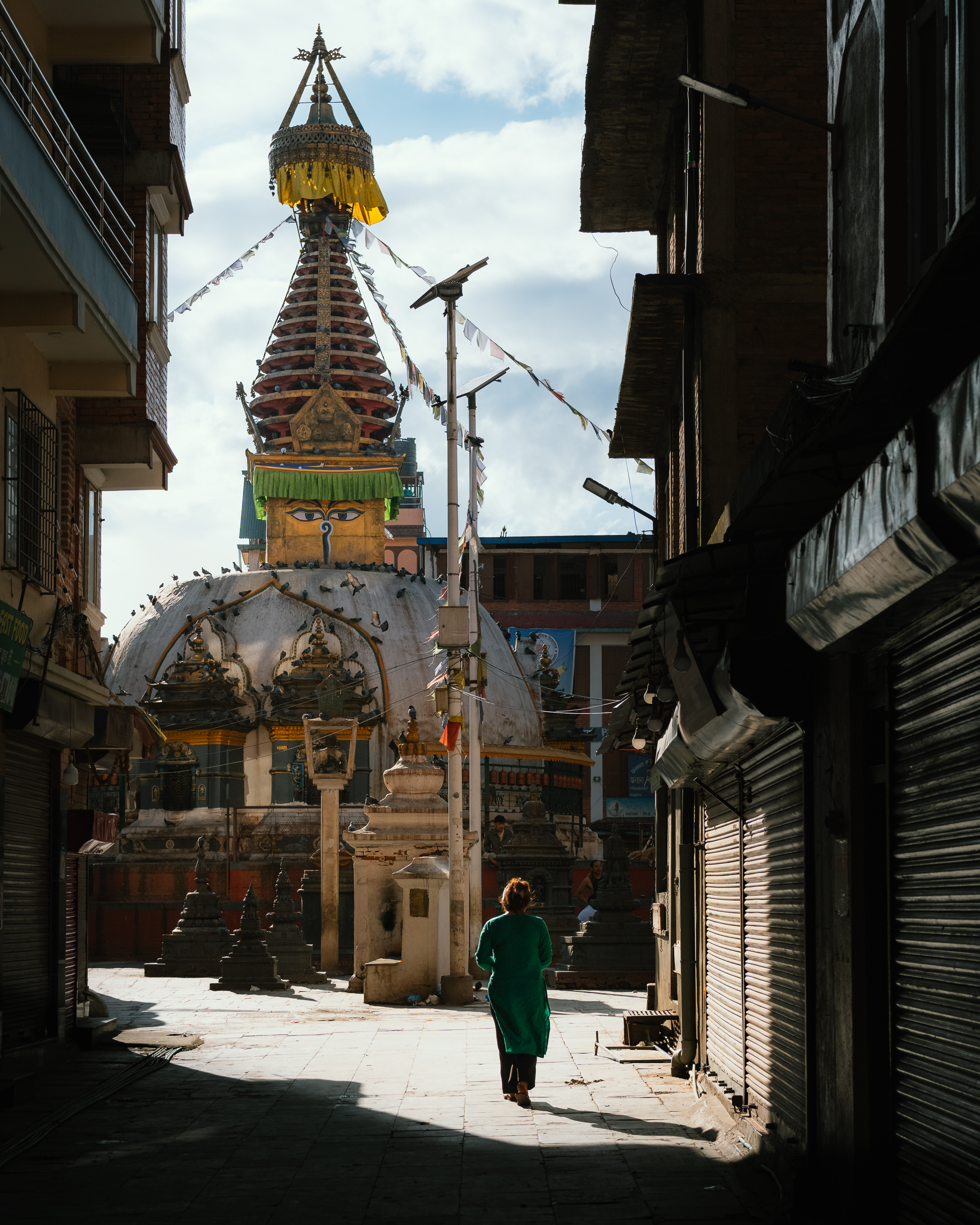
Sony A1II & 40mm F2.5 G | 1/2500 sec | f/5 | ISO 100
Utilise Light
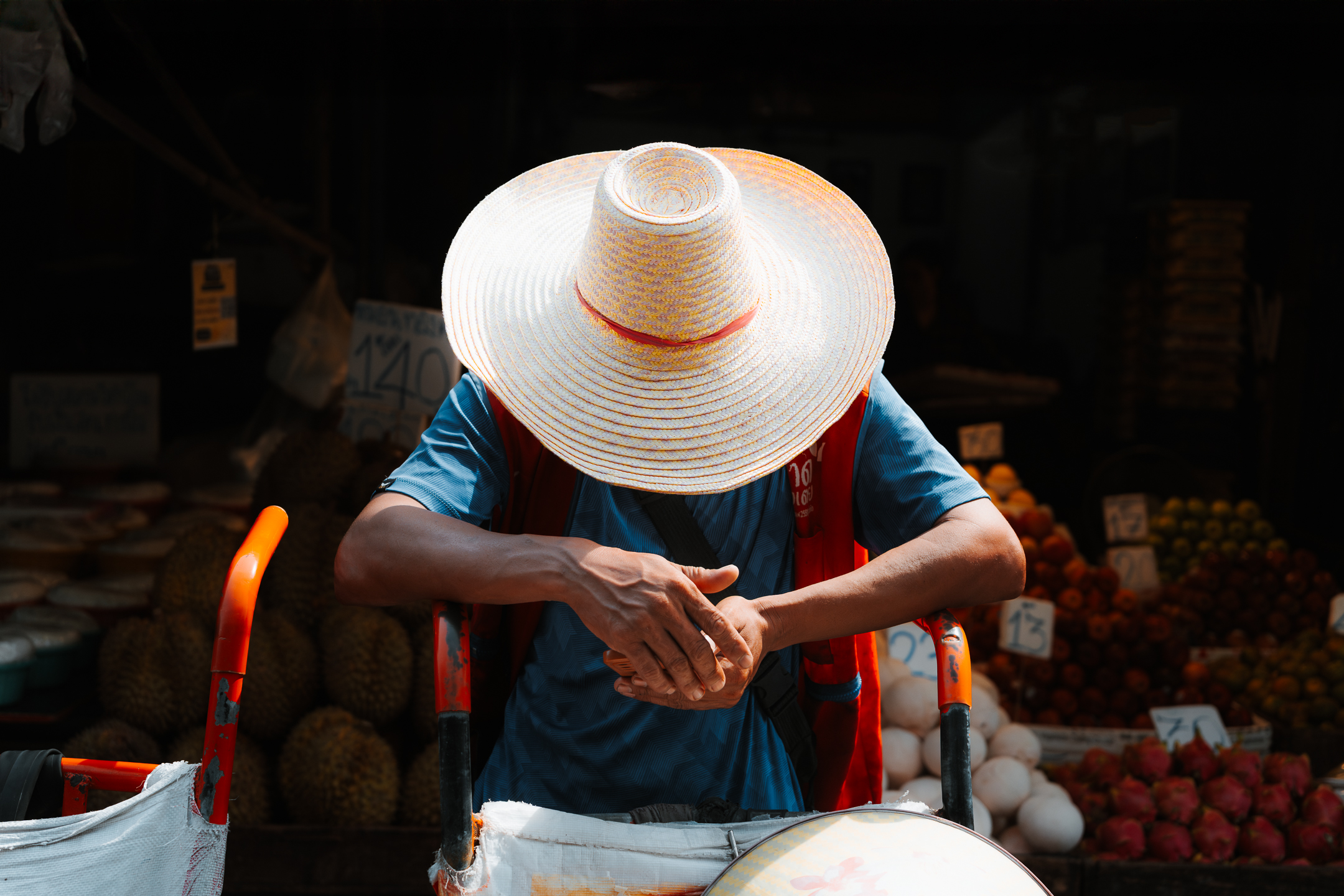
Midday sun can create harsh shadows and pockets of light, but sometimes that’s exactly what you need. I love shooting at this time of day when previously I would restrict myself to only shooting at ‘Golden Hour’ however this will offer warmth and softness that turn ordinary scenes into “cinematic” moments. If a city or place is brightly lit at night then this will allow you the option to shoot deep into the night. With all that being said I’m happy to shoot on an overcast day as this can create a nice soft light across your images.
Don’t just chase light, learn to shape it. Stand near reflective surfaces, use puddles after rain, or shoot through glass for layered reflections. These small tricks can transform a flat image into something dynamic.
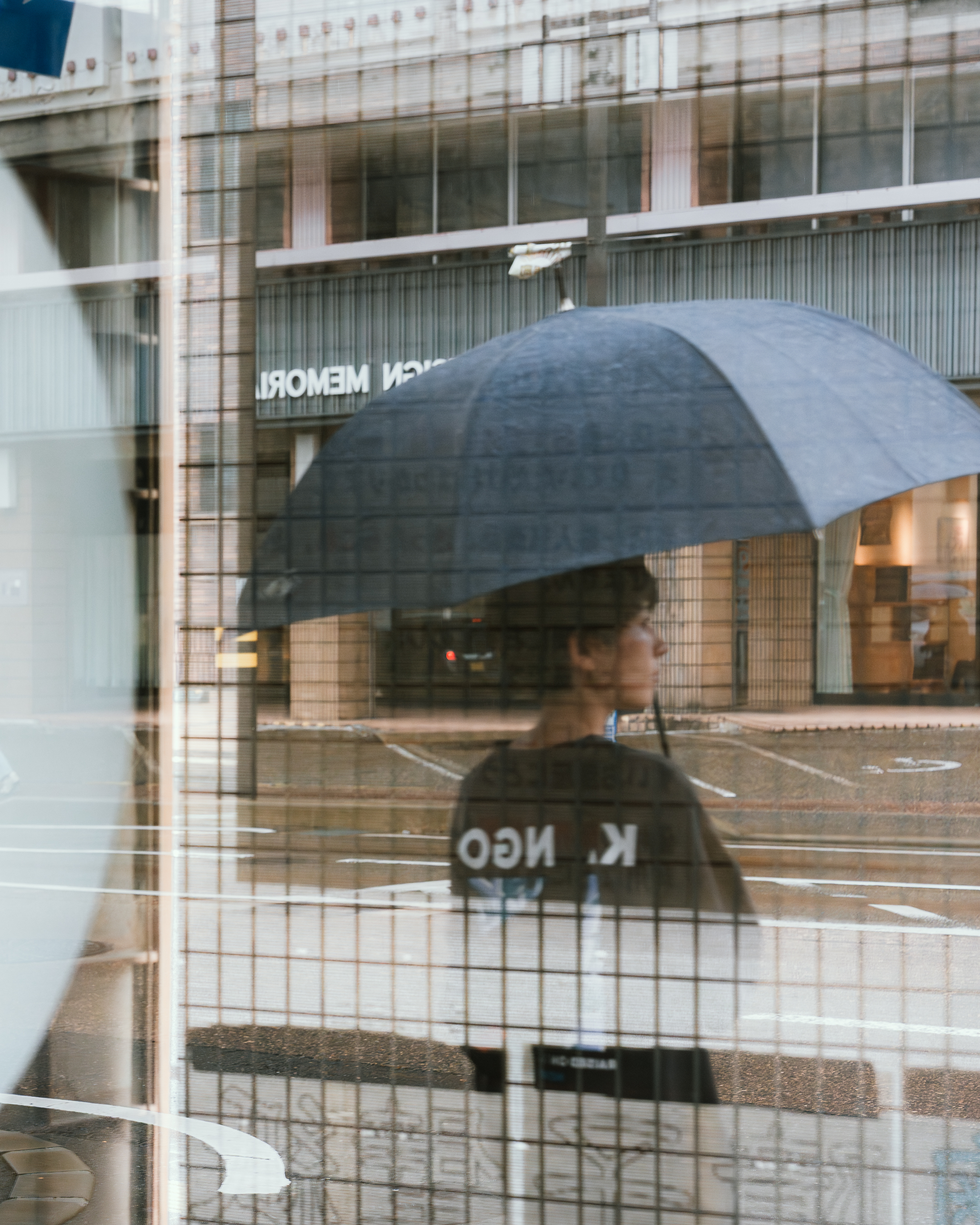
Sony A1II & 24-70mm F2.8 G | 1/250 sec | f/5 | ISO 2500
Anticipate, Don’t React
I think an important point here is not to wait for moments but to predict them. As I mentioned earlier look at how the light hits or how people move through the scene.
I’ll never forget a morning I had spent in Hanoi Vietnam back in March when I was shooting a sunrise on this bridge filled with mopeds. I remember thinking to myself this is a nice image but it’s missing something, it needs something else like an interesting character on the pavement to give it some purpose and tell a better story. The next minute, three monks walked onto the pavement next to the road, I couldn’t believe it. Another point that goes back to knowing your camera, I was easily able to adapt to the situation with a few button presses and walked away with one of my favourite images from this year.
Patience is underrated in street photography – it’s easy to panic and just spray and pray sometimes this works but there’s something beautiful about slowing it down within the moment, watching the scene unfold and learning the rhythm of your surroundings. Anticipating beats reacting every time.
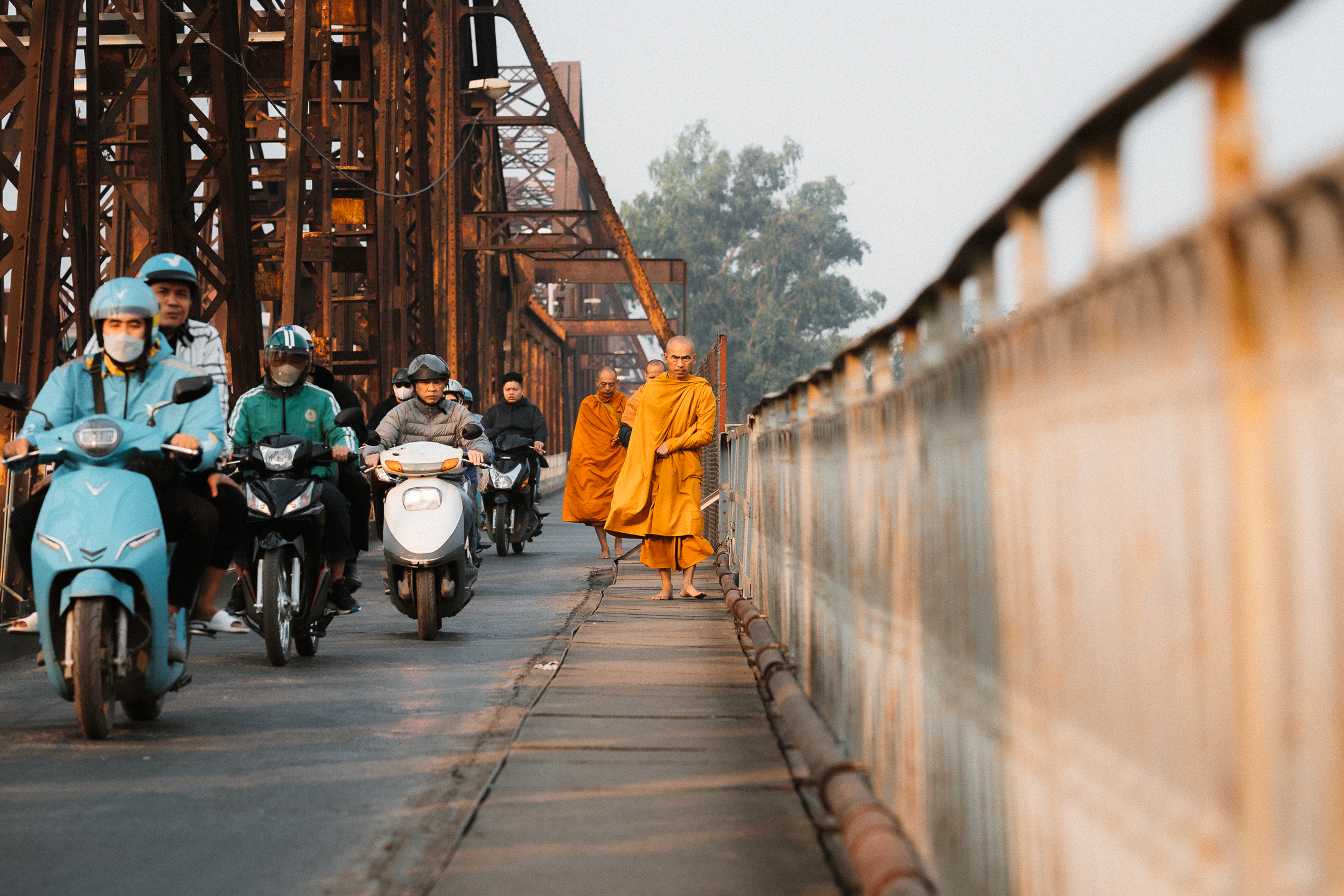
Sony A7CII & 85mm F1.4 G | 1/800 sec | f/3.5 | ISO 120
Simplify Your Setup
You don’t need a bag full of lenses. In fact, I recommend the opposite. Use gear that’s lightweight, compact & discreet. I remember the days of carrying around a backpack filled with every single lens I owned, trust me doing that in 35 degree heat is not fun. Go light, bringing too much gear will not only break your back, make you stand out and make the shooting experience miserable but it’s also more restrictive than you think. Nowadays I’ll take a small sling bag with small zoom lens and a prime depending on the location. You’ll be amazed what shooting with a fixed focal length will do for your creativity. I almost always shoot street with the FE 40mm F2.5 G lens - it’s versatile, discreet and resembles how I see the world. For me the 40mm focal length just works perfectly with how I like to shoot. Limiting your options makes you more decisive and connected to the scene.
A light setup also means you’ll actually take your camera everywhere. My Sony gear is small enough to carry all day without fatigue and that’s made a huge difference. The best shots usually happen when you least expect them. Once you have a camera on you more and you’ve started to train your eye with the steps above you’ll be surprised that you don’t need to travel halfway around the world to capture a good image.
My go-to set up over the last few years has been the Alpha 7C II with the FE 40mm F2.5 G and FE 24-50mm F2.8 G. An incredibly un-intimidating set-up that’s small, lightweight and discrete but produces incredibly good photos and video.
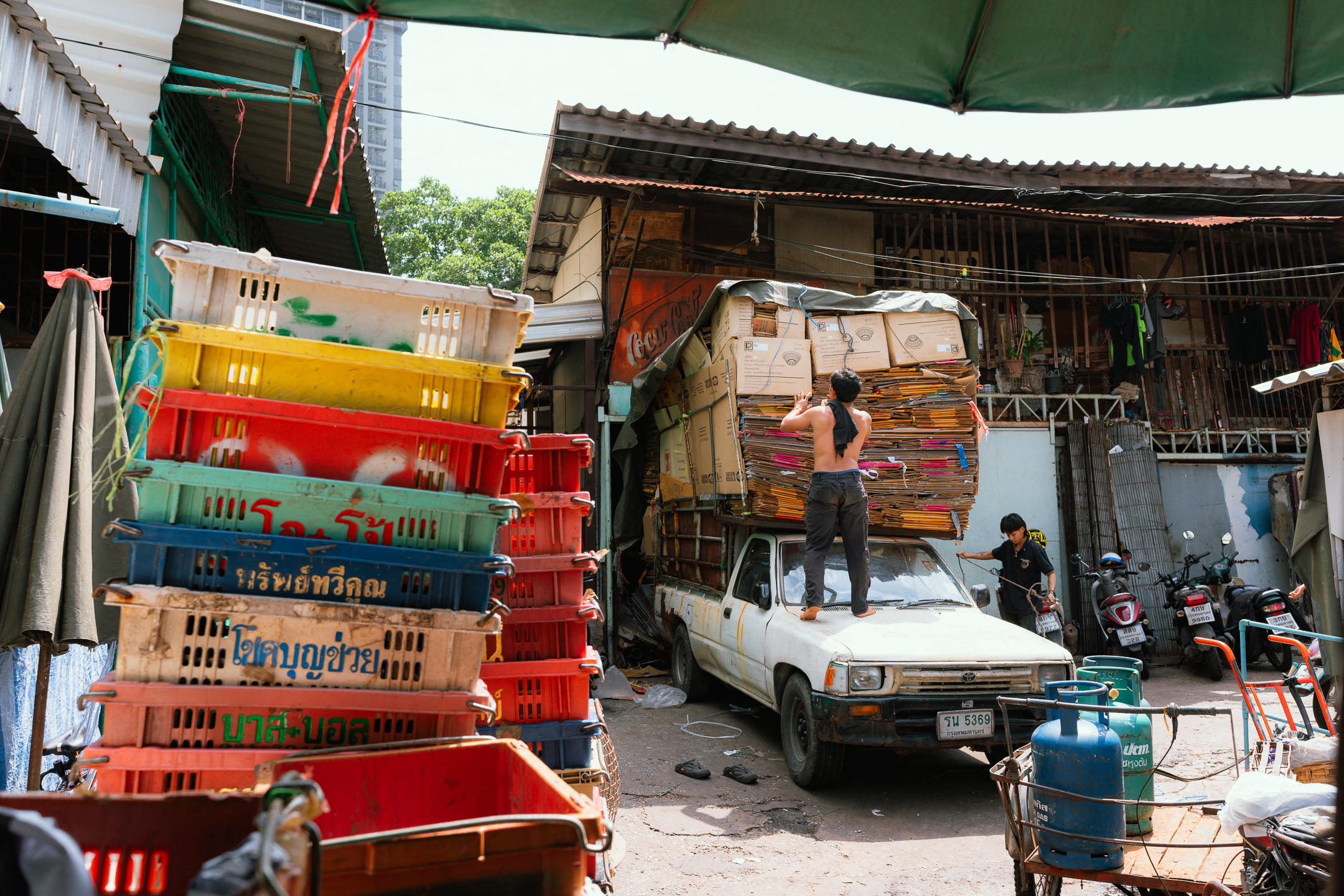
Sony A1II & 24-50mm F2.8 G | 1/500 sec | f/5.6 | ISO 400
Perfectionism is holding you back
Something I have to keep reminding myself on a regular basis is to stop searching for perfection. It’s honestly one of the biggest creativity killers there is. I’ve learned that chasing the “perfect” frame, composition, or moment can actually stop you from seeing what’s right in front of you.
I’ve always had a bit of OCD when it comes to my images - I want every element to sit neatly in balance, every line to lead somewhere, every distraction removed. But street photography isn’t always neat. It’s chaotic, unpredictable and alive. Trying to force that chaos into something perfectly minimal often holds me back from clicking the shutter.
I have to remind myself of this most days, that imperfection is what makes an image human. Some of the best street photos aren’t technically perfect - they’re slightly off, a little messy, sometimes even out of focus. But we can always learn from these little imperfections and take the lessons into our next shoot. It’s better to have images to learn from than none at all right….
When you stop obsessing over getting everything right, you start to see more honestly. You begin to feel the rhythm of a place instead of controlling it. The moment you let go of perfection, your creativity can open up and your photography becomes far more authentic.
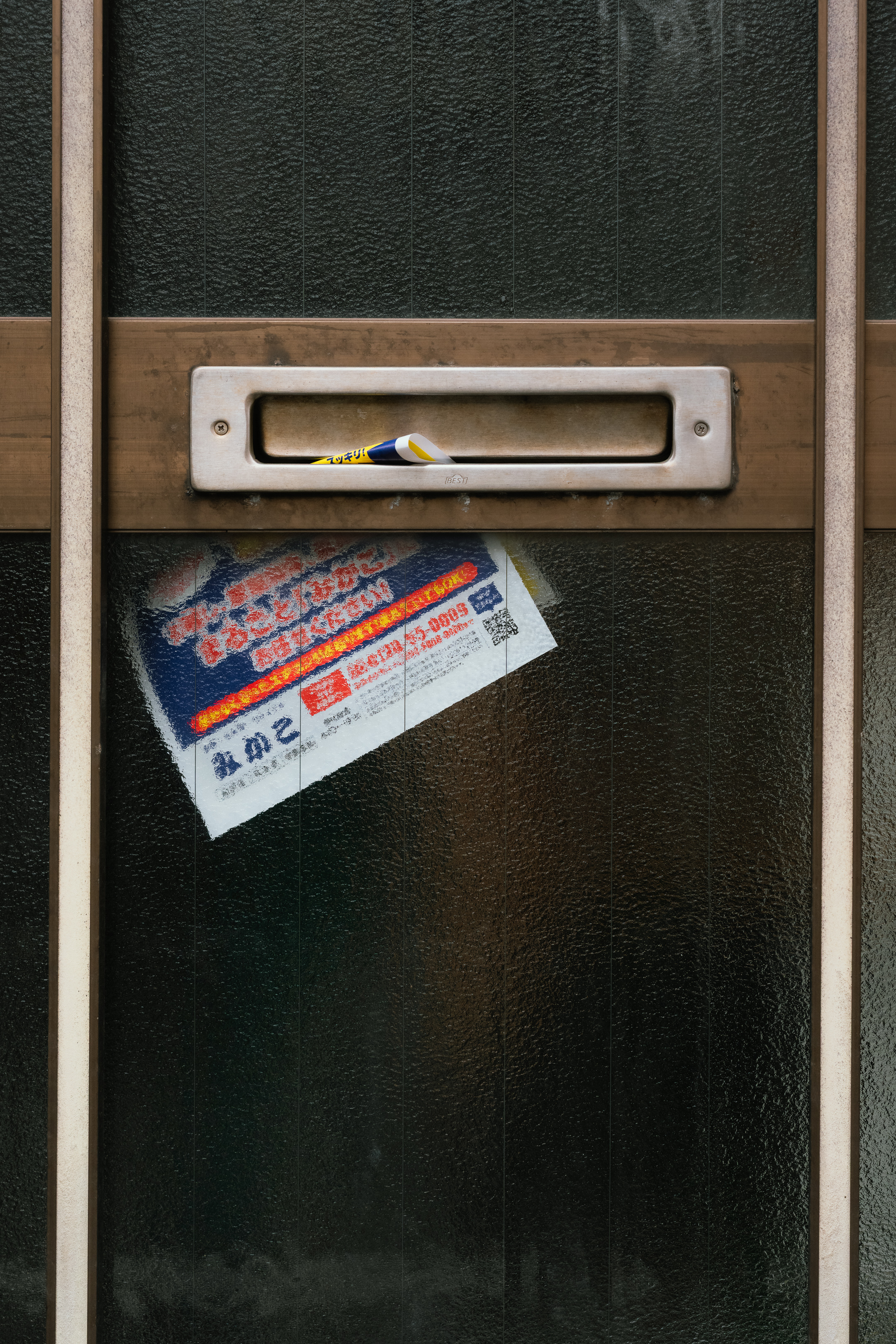
Sony A1II & 24-70mm F2.8 G | 1/250 sec | f/5 | ISO 1000
Shoot More Photos
Street photography is a muscle. The more you use it, the sharper it gets. I try to shoot something every day even if it’s just a few frames on the walk round the block to my local coffee shop. These images most likely will never see the light of day or be in my portfolio but I just love the art of capturing photos.
Over time your instincts sharpen, you start to feel timing rather than think about it. That’s when street photography becomes second nature, when seeing turns into intuition. I’ll have to admit I’m the worst for this, coming home from a big trip overseas to put the camera away for a few weeks whist I work on the images I’ve just captured. The next time I pick the camera up it’s like starting all over again.
It’s crazy the things you’ll see once you’ve had your camera in hand for a few days, get your reps in and SHOOT MORE PHOTOS!
Finding inspiration is also a huge part of developing your eye as a photographer. Over the past few years, as I’ve spent more time working with video, I’ve found that watching films has deeply influenced how I think about framing and composition. I also draw ideas from the work of other photographers, from books by artists I admire to social media platforms. It’s never about copying someone else’s style, it’s about trying to understand how they see the world and what they’re trying to convey through their work.
The biggest source of inspiration for me in recent years, though, has come from connecting with people. Photography can be a lonely pursuit and I love that solitude. I enjoy travelling alone, setting my own pace, and exploring places that inspire me. But there’s something incredibly powerful about shooting with like-minded photographers. Everyone sees the world differently, and when that creative energy starts bouncing between people, something genuinely special happens.
Street photography isn’t about chasing perfection, it’s about chasing connection. It teaches patience, observation, and empathy. Whether you’re exploring new cities or documenting your hometown, remember that every photo is a small act of noticing.
Keep your camera in hand, stay curious and trust that every corner has a story waiting to be told.