





Introduction to Sports Photography
Sport is emotion in motion. The crowd might see goals, wins, and losses but as photographers, we see stories.
We see the quiet exhale before a free kick, the watery eyes during an anthem, the long walk back after a missed chance.
For me, working across women’s sport for twenty years, the camera has been more than a tool, it’s been my access pass into worlds of resilience, identity, and belonging. Every frame tells you something about who these female athletes are and the struggle, courage, passion and conviction they carry.
In women’s sport, especially, every image feels like a small act of rebellion and the encapsulation of history.
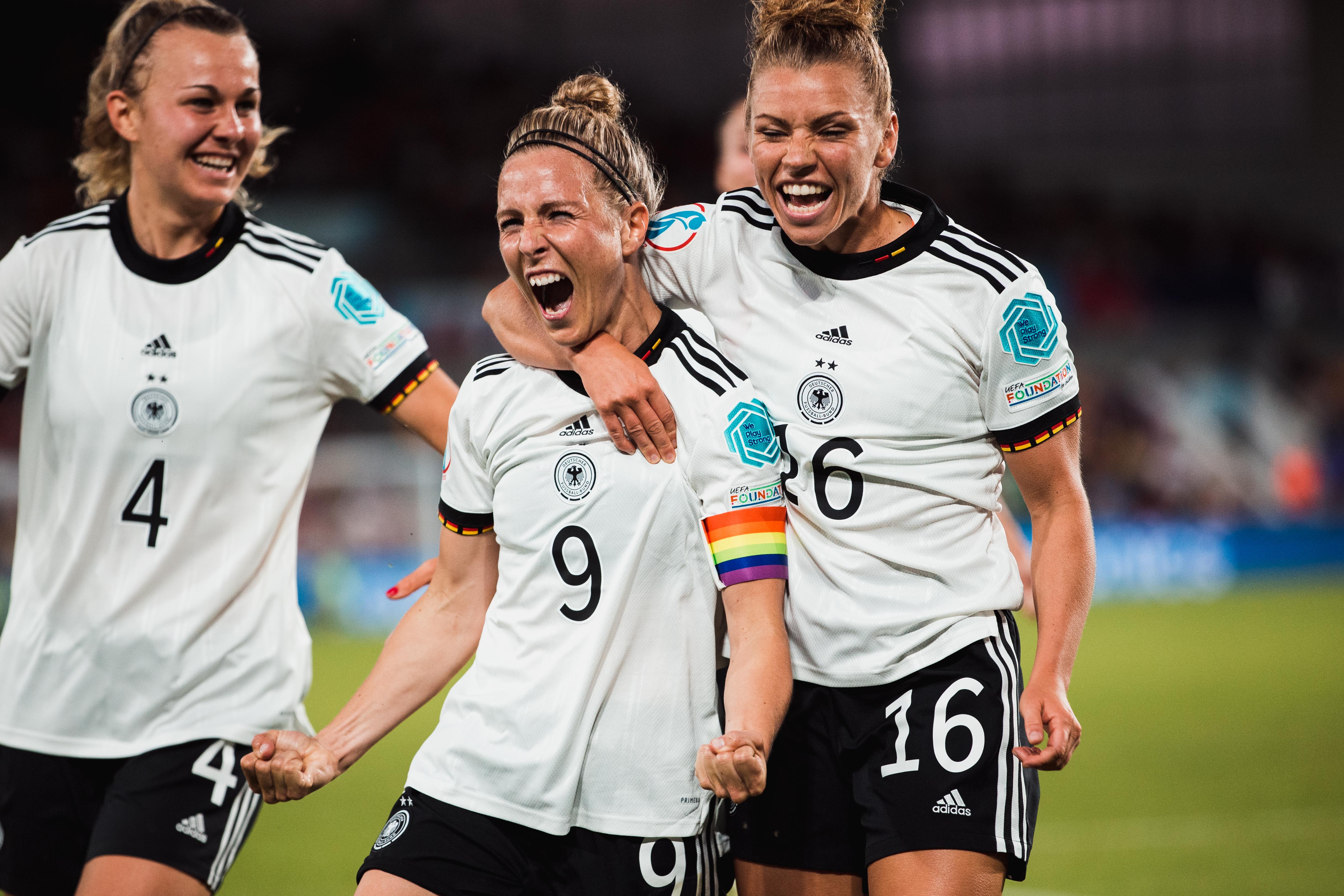
Techniques for capturing emotion in sports photography
In live action photography, you can’t fake emotion in a photograph. You can only be ready when it reveals itself. Often completely unexpectedly.
The Alpha 1 has become my go-to because it lets me stay completely in the moment and ever ready. Fast autofocus, incredible dynamic range, and the ability to shoot silently when emotion is delicate and unguarded.
When I want to draw people into the emotion, the eyes, the tension in the jawline, the breath between plays, I use the FE 70-200mm F2.8 GM II. It’s the perfect emotional lens: close enough to feel intimate, far enough not to intrude.
For wider atmosphere, the weight of a stadium, a huddle forming under floodlights, I reach for the FE 24-70mm F2.8 GM II. Up close, post-match, it puts you inside the moment so that you’re close enough to feel the heartbeat of the scene, the sound of boots scraping against turf, the heavy breathing after ninety minutes. When you look at the images later, you don’t just see the players, you feel like you were standing right there beside them. That is also my trusted lens, as to be that close and that intimate with athletes takes time to build trust and connection.
And when I need isolation, when it’s about one athlete against the world, I go long with the FE 300mm F2.8 GM. It compresses the chaos, drawing the eye straight to the heartbeat of the scene. But it can also give you the chance to draw out the intricate details when paired with a high-megapixel camera like the Alpha 1.
Capturing emotion means knowing when not to shoot and waiting that half second after the goal, when joy dissolves into disbelief or relief. That’s where the truth lives.
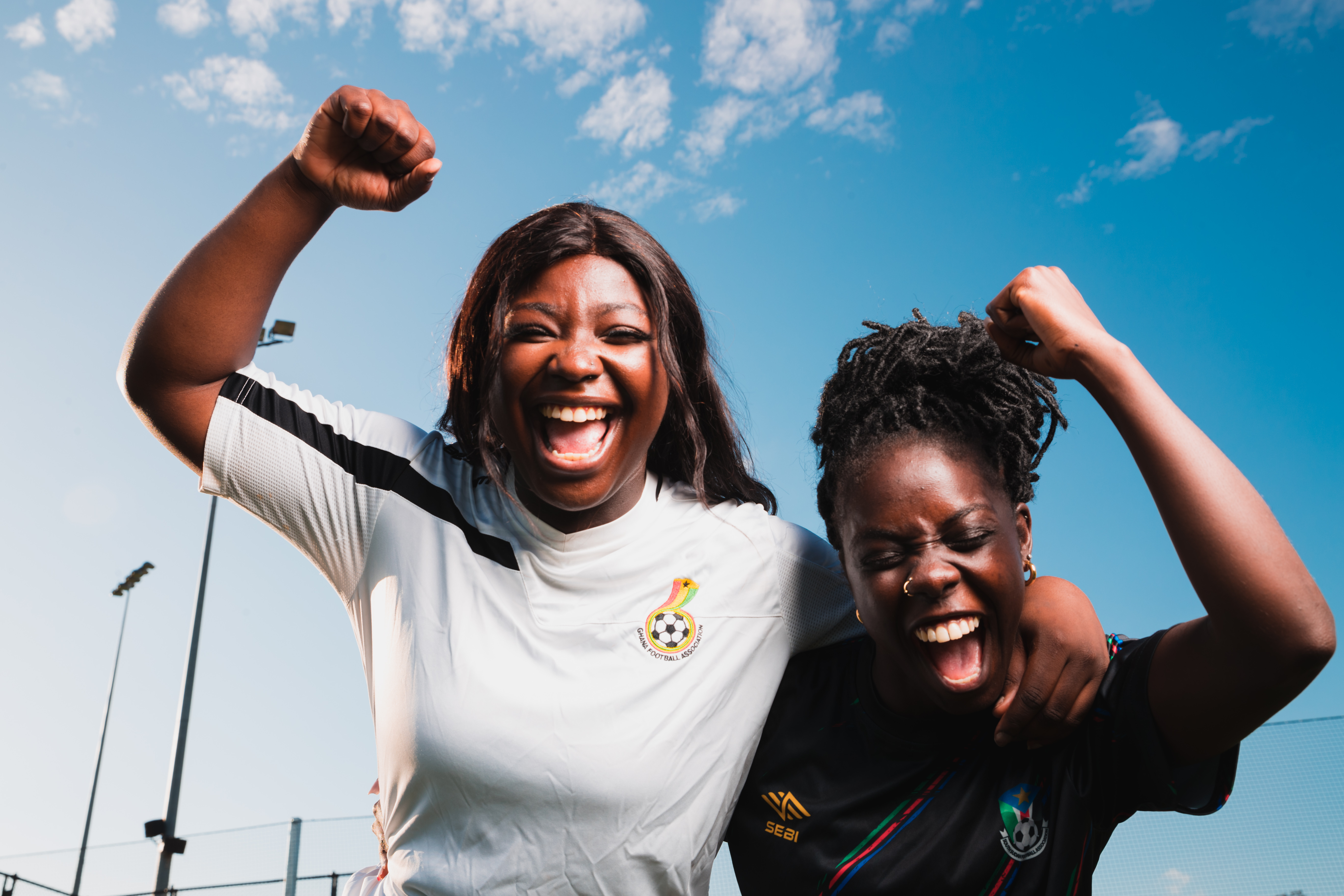
Creating Dynamic Compositions
Composition is where instinct meets discipline. You can learn the rule of thirds, but storytelling often happens in the in-between. That moment when the frame feels slightly off, but emotionally right.
I think of composition like rhythm. You build tension and release through placement, movement, and where the viewer’s eye travels. In team sports, I often compose to show connection with the outstretched hand, the explosion of celebration with teammates or fans, the consolation after an instance of despair.
Wide, medium, and tight shots, each frame is a chapter in the same story. I use those perspectives across a match so the audience can feel the full arc: the scale of the moment, the rhythm of the play, and the emotion in a single glance. Together, they let people see and feel every part of the story.
Lens choice is what gives those perspectives their voice. My foundations are the FE 24-70mm F2.8 GM II, FE 70-200mm F2.8 GM II, FE 300mm F2.8 GM. The 24–70mm is versatile enough to move between the intimacy of a huddle and the breadth of a stadium. The 70–200mm is my emotion lens, perfect for isolating a player’s face, a clenched fist, or the moment connection turns to celebration.
For bigger arenas and fast, open play, the 300mm lets me pull focus to one subject, compressing the chaos into clean, powerful emotion. But when I want to bring the audience inside the story, especially post-match or behind the scenes, I switch to the FE 85mm F1.4 GM. It’s my favourite for portraits and quiet emotion; it draws out the softness, the eye contact, the humanity in the aftermath.
And then there’s the FE 50mm F1.2 GM as it bridges context and intimacy as it's wide enough to include the environment, but fast enough to capture fleeting emotion in natural light. Whether it’s a locker room laugh or a player sitting in reflection, that lens feels honest and human.
I love using negative space as it lets the athlete sit in the frame, surrounded by empty grass or sky or in powerful profile. It gives the moment room to breathe and reminds viewers how big the stage can feel.
Lines are your quiet storytellers. The curve of a huddle, the verticals of goalposts, even the shadows on the pitch can guide the eye and frame the feeling. When your lens and composition work in harmony, you’re not just documenting sport, you’re translating emotion into something that brings the audience in and gives them an understanding of the sport and athletes.

Showcasing sports photography artistry
Curation isn’t about perfection; it’s about deciding which moments matter most. When I look through a shoot, I’m not just picking my sharpest shots, I’m tracing emotion. Building sequences that move like a game: anticipation, action, consequence, connection.
Photography isn’t about showing athletes at their most polished, it’s about showing them at their most real.
It’s for this reason that I try to edit with edit with restraint but never chase perfection. Sweat should look like sweat. Dirt, bruises, and stray hair are part of the truth.

Building connection to strengthen storytelling
The secret to great sports photography isn’t your shutter speed; it’s trust. Before I ever felt a little more solid in my craft (even now I am still very conscious of continuing to grow), trust was the secret weapon.
Over time, I’ve built relationships with players and teams that allow access to raw, unfiltered emotion. They know I’m not there to sensationalise but I’m there to see them. To champion and showcase because I believe and care for who they are and not just what they do.
Connection changes everything. When players believe in your lens, they stop performing for it. That’s when you capture the moments that matter. Frames that will still mean something a decade from now.
That’s what draws me to women’s sport as each photo becomes a piece of its growing history, shaped by the athletes who live it. Every frame holds a voice, a story, a reason it matters.
They are history makers, paving new paths for the future. Each photograph becomes proof that they were here, that they shaped the game and inspired what comes next.
Australian football legend Melissa Barbieri once said to me that we as photographers are their memory keepers and that has always stuck with me as it denotes a responsibility that is not to be taken lightly.
They don’t just play for now. They play for the generations watching from the stands, dreaming on backstreets, and believing they belong. To capture that is powerful. To tell that story through the lens is an honour.
And through the right lens, with the right heart behind it, we don’t just record sport, we capture history and emotion in motion.