

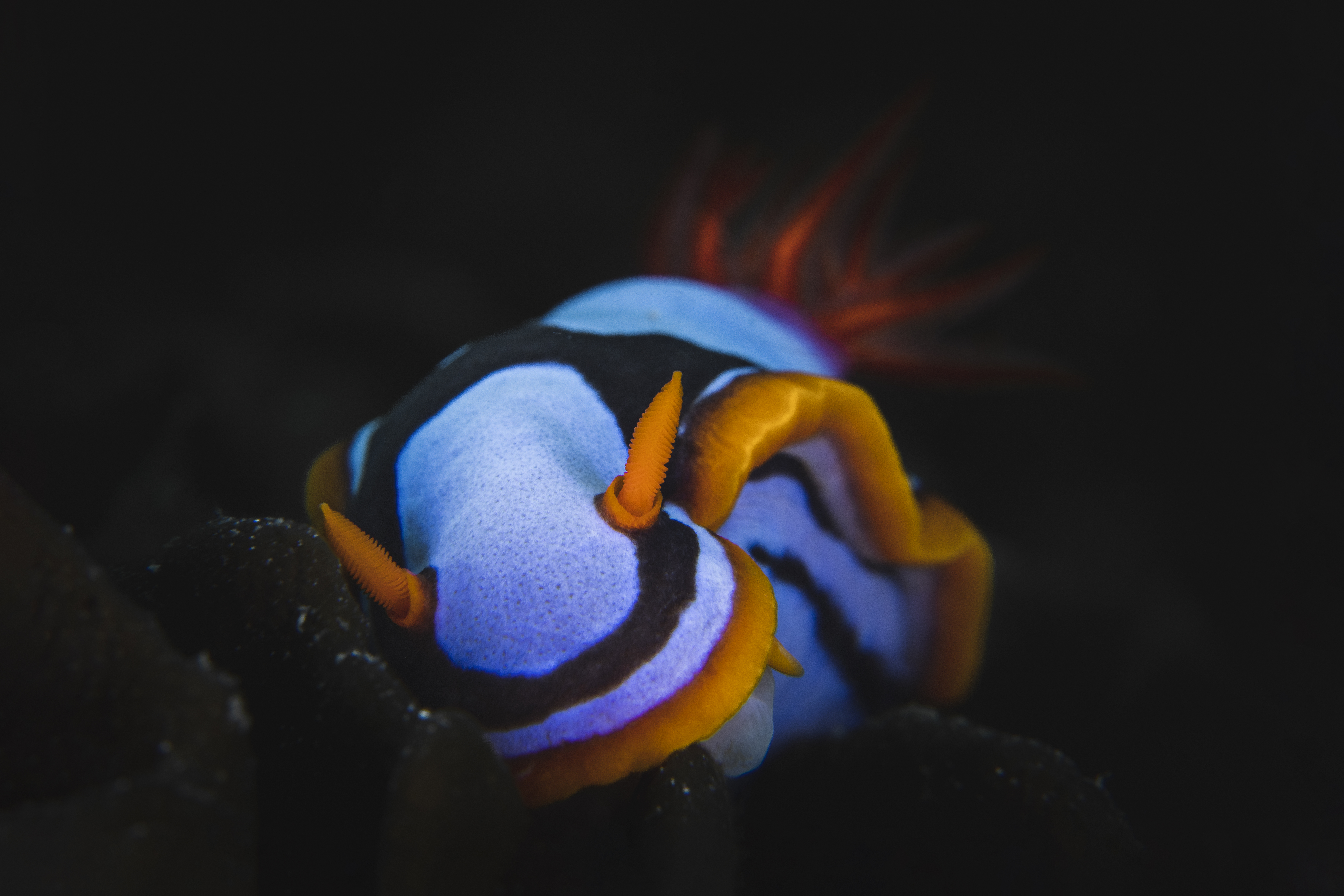
Working in the dive industry in my younger years I was lucky enough to meet many people with a shared passion for the underwater world. No matter where it was that we were diving, there would be one common theme that was as predictable as the tides. The direct correlation between how long someone had been diving and their ability to memorise the Latin names of nudibranch species.
At the beginning of their diving journey pretty much everyone, myself included, is fixated on the large coral reefscapes and marine megafauna encounters such as sharks, whales and turtles that can be found on our tropical reefs across the world. But sure as clockwork the longer someone spends diving the more interested they get in the elusive and spectacularly tiny critters that can be found on a dive, the animals that traditionally fit into the “macro” category of photography.
Whatever stage of your diving journey that you find yourself at, this guide to underwater macro photography is meant to give you a firm and solid understanding of the basics to tackle new subjects with confidence and capture images that you’d be happy to bring back to the surface and show your land loving friends and relatives back home.
Sony A1 & FE 90mm F2.8 Macro G OSS | 1/250 sec | f/18 | ISO 500
What is Macro photography
Macro photography in its purest sense is considered anything where the subject is displayed on the sensor at a 1:1 or larger ratio. An easy way to understand this is to pretend we have found a crab that is 35mm wide on a dive at our favourite spot. We shoot it with a macro lens of 1:1 reproduction on a full frame sensor and it fills the entire length of the 35mm frame, giving the image that larger than life look to it. The lens has reproduced the image the exact same size onto the sensor as the crab is in real life, allowing impressive tiny details to be captured that other lenses might miss. This is macro in its truest form but realistically, underwater macro fits a much broader spectrum of images and the general rule is if the subject is small and it's shot with a macro lens, then it's a macro image.
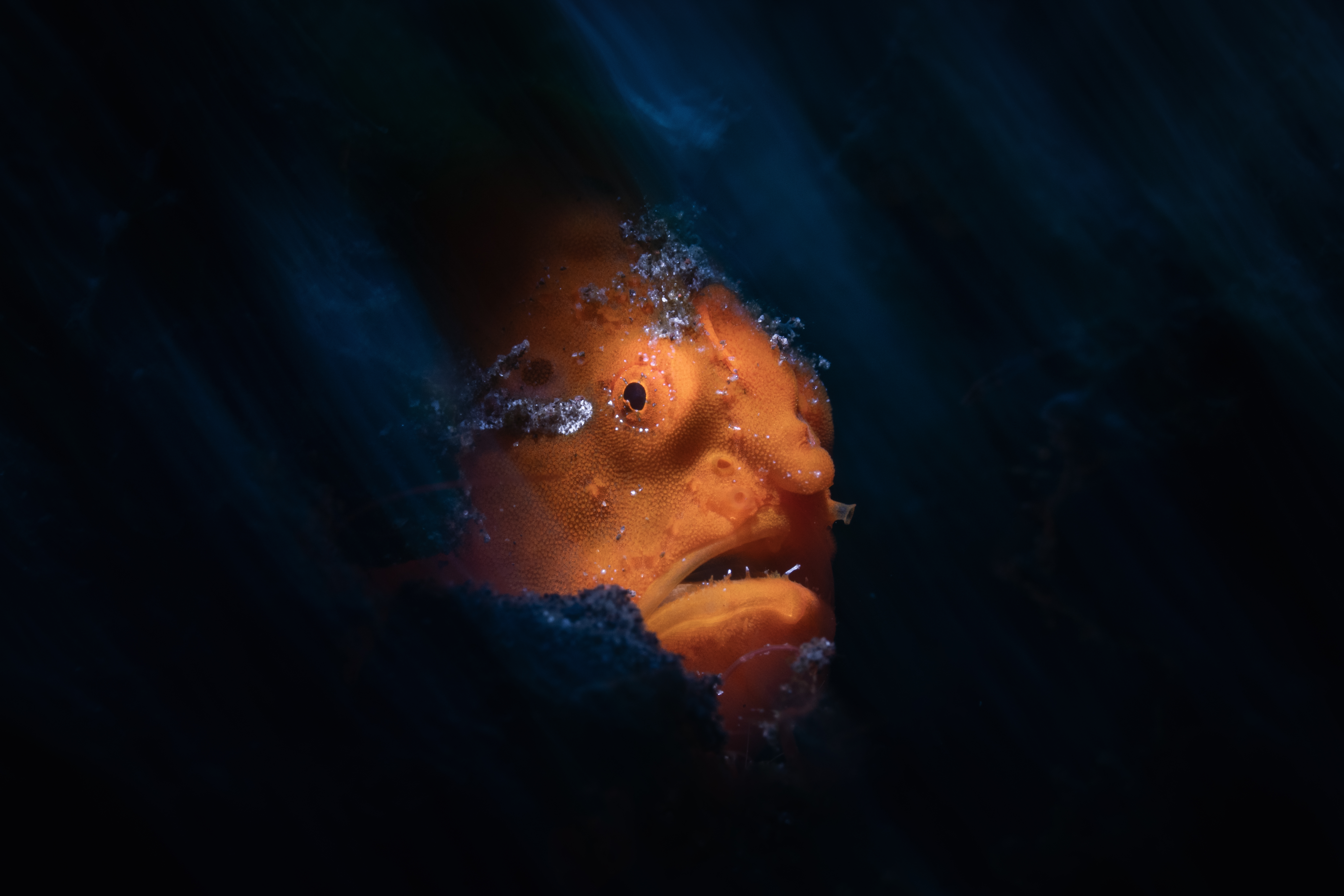
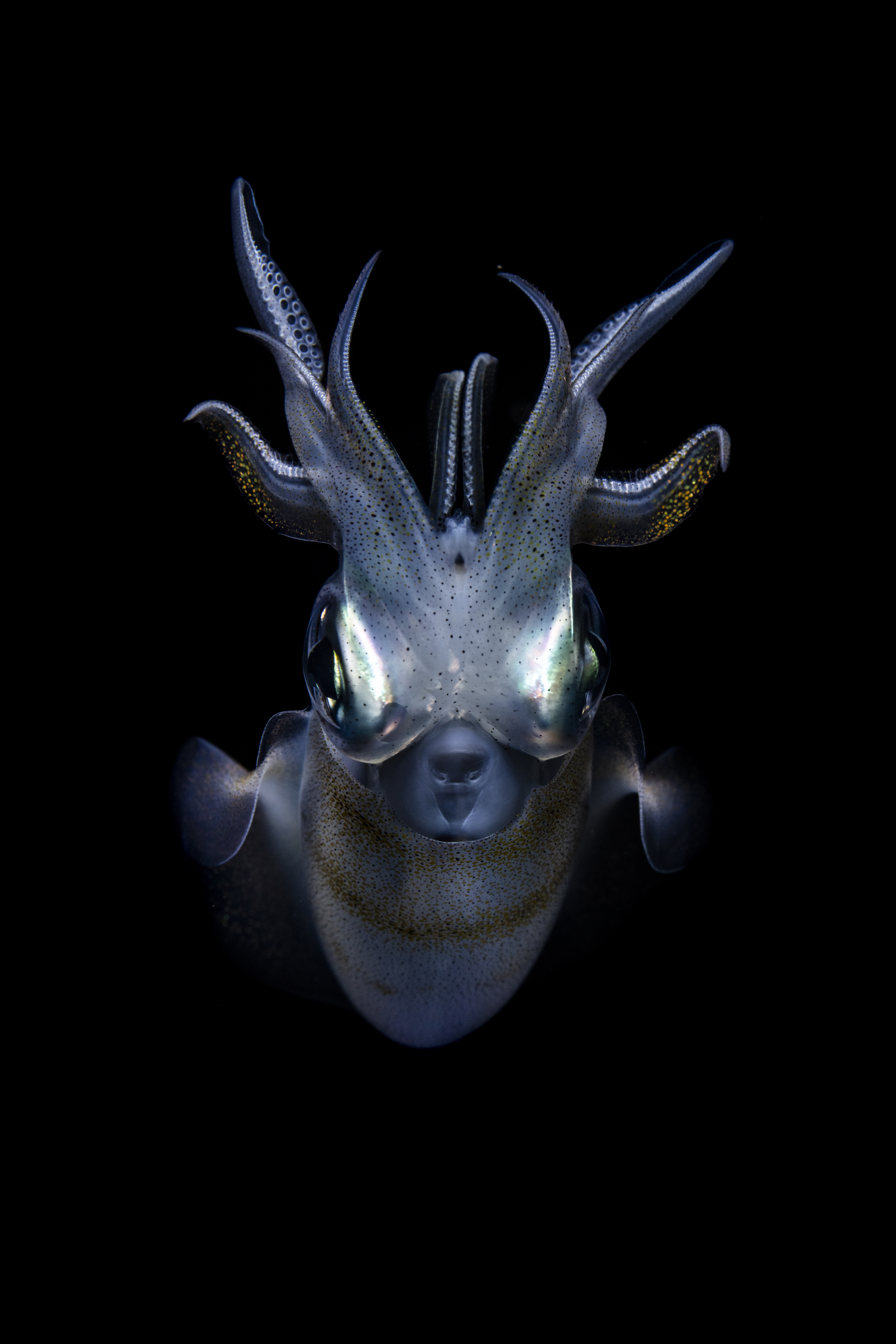
Sony A1 & FE 90mm F2.8 Macro G OSS | 1/50 sec | f/16 | ISO 125
Gear
Due to the extreme nature of the optics used in macro photography, attaining the required magnification to shoot animals often smaller than a pinky nail requires some pretty specialised lenses. Sony has three great macro lenses in their full frame lineup, two of which are excellently suited for the underwater world. These are the FE 90mm F2.8 Macro G OSS lens and the new and incredible FE 100mm F2.8 Macro GM OSS lens. Both of these lenses when paired with the correct camera and housing make for the perfect setup when you start to get serious about underwater macro photography.
I have spent the last 5 years shooting with the 90mm so all of the images you see in this article have been shot with that lens, but I have recently upgraded to the 100mm and from all accounts it is even better than the already awesome 90mm lens!
So my first bit of advice might be an obvious one, but make sure to spend the money and buy a good macro lens, it will be worth it in the long run to have access to such high image quality once underwater. As you will soon learn, shooting through water with optics designed to photograph in air means a lot of image degradation, so starting with the strongest setup from the get-go gives you the best chance of being happy with your photos.
Almost all of the cameras in the Alpha lineup handle low light well enough for macro, so other than the newest subject tracking features, I’d be less concerned about the camera over the lens when it comes to getting the best results. A lot of the smaller critters are shot using manual focus anyway, so having access to the latest and greatest is nice, but not always necessary. I know that sentence is easy for me to say as I shoot with the Alpha 1, but I’d much prefer to swap my camera body when shooting macro than my lens! I guess what I’m getting at is to make sure you stretch your budget as far as it goes with the lens as it's the lens that is going to make the biggest impact down there.
The next bit of equipment you’re going to need is a camera housing, something to protect your expensive camera gear from the bumps and knocks on dive boats and the most obvious camera killer, water… If you’ve been photographing underwater long enough, then chances are you will have likely flooded a camera housing a few times, most often it’s due to sand or hair being trapped in the waterproof seal and allowing water ingress. There's also a chance that after your first flood incident and the ensuing broken camera, that you upgraded your camera housing to something more robust and higher quality. Unfortunately nothing good is cheap in the camera world and it certainly stings the most when it comes to underwater photography. The old saying of “the poor man pays twice” rings true here, so although there are multiple budget housings out there on the market, it's definitely worth spending the money and getting something at least mid-range.
The last major bit of equipment that is going to be essential on your macro journey is lighting. Above water it's most commonly in the form of a flash, underwater they are the same principle, but we use two and they are called strobes. Water plays some interesting tricks on light, absorbing a lot of it the deeper you go, but unfortunately for us not at an even rate. The visible spectrum of light that we see every day is made up of multiple colours, and as this light filters through water different colours are absorbed at different rates, meaning that the deeper you go, the less colour you have in your images. The first to go is red, usually at around 5 metres, meaning there will be no red tones in your images deeper than 5 metres. This colour scale really has nothing to do with depth and more to do with how much water that light has passed through to get to that depth, so if you’re sitting with a turtle at 6m depth then the light you see on the turtle has had to pass through 6000mm of water to get there and along the way has lost all of its red and some of its orange. Once you get below 30m depth, the only remaining colour is blue, hence the name the big blue…
To counteract this, we use strobes to introduce the full spectrum of light back into the picture and providing you are nice and close to your subject (aka not 6000mm away) then the light will illuminate the subject with all of its colours, giving the effect of bringing colour back into the scene. Not only do you lose colour down there, but it also gets very dark, so strobes help with balancing the light quantity in the scene as well as quality. There is a lot to learn about strobe placement and styles of use, but I think that is best saved for later lessons. What you need to know now is that strobes will make an enormous difference to the quality of your images, bringing the rich colours back into the scene in ways you never thought possible.
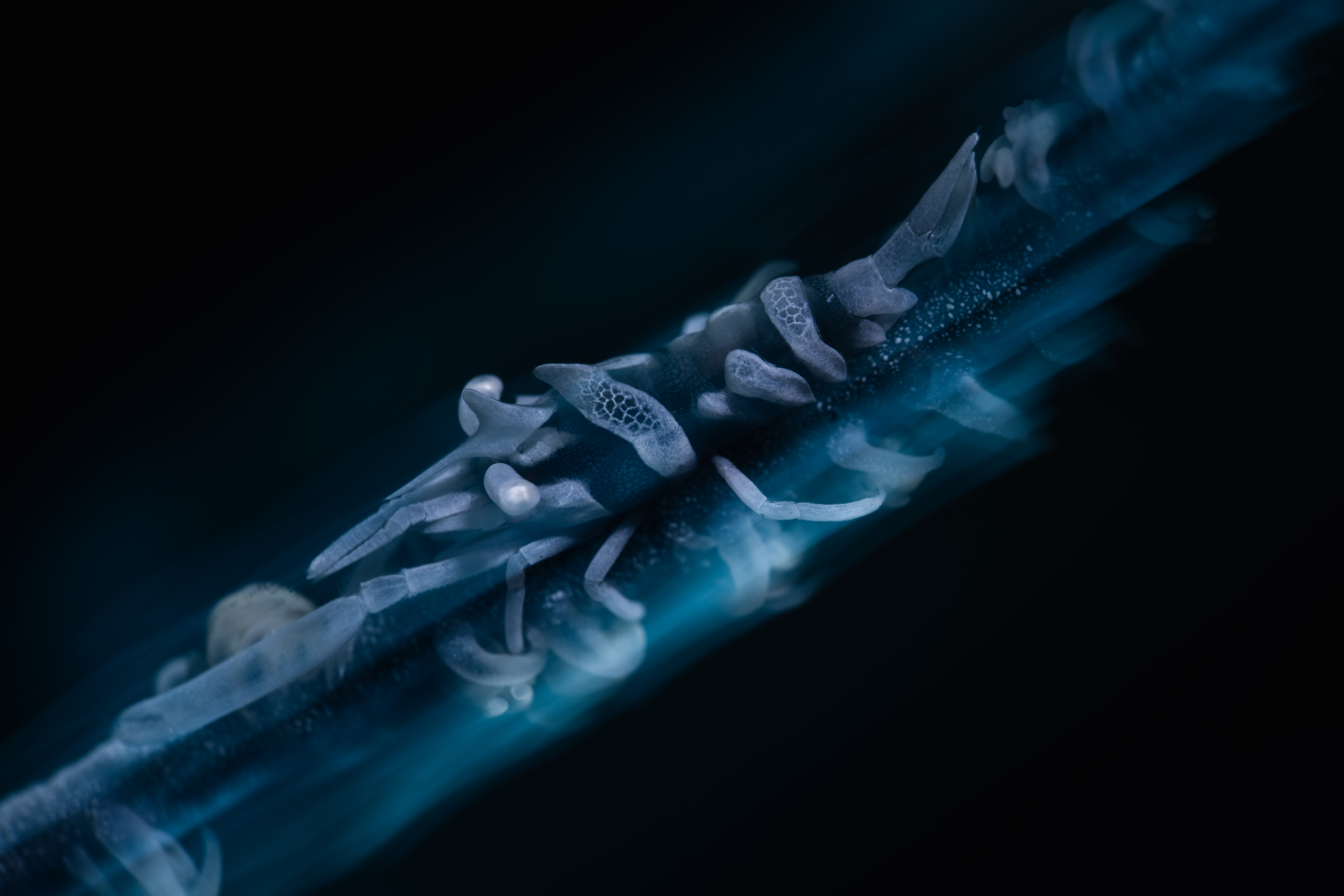
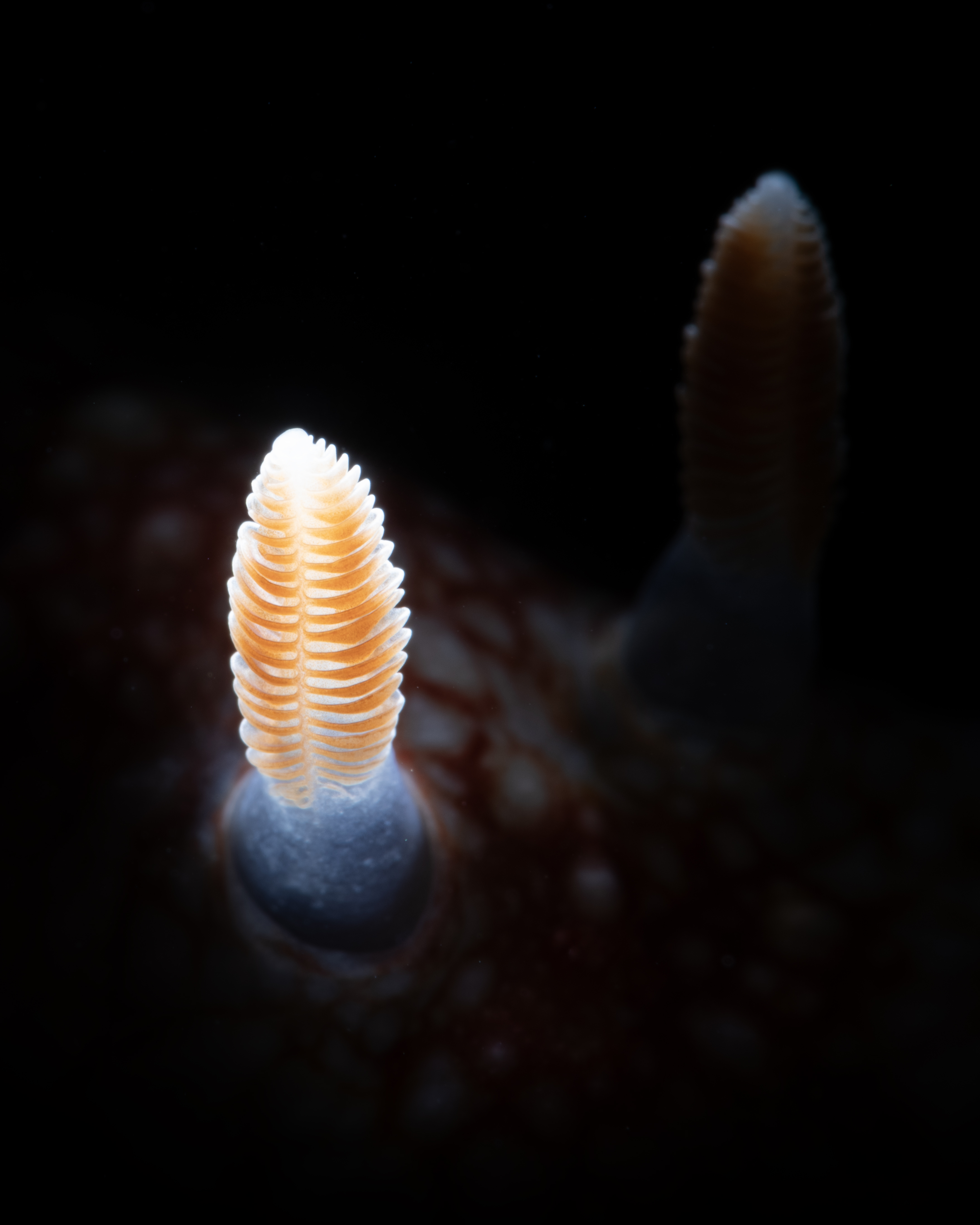
Sony A1 & FE 90mm F2.8 Macro G OSS | 1/8 sec | f/13 | ISO 125
Where and how to find your subjects
Like all forms of wildlife photography, a lot of your success in images depends on learning how to find your subjects. To me, the biggest joy in this genre of shooting is spending the time to learn about the subjects that you want to photograph. Where do they live? What time are they active? Are they found in certain habitats? Are there certain dive sites that they are commonly photographed at? There are hundreds of questions that need answering when it comes to learning enough about a subject to photograph it well, but thankfully when you're just starting out, it can be easier to find a dive site with decent macro opportunities and just go for a dive. You’ll often stumble across cool subjects when on your dive and can then spend some time perfecting a shot before moving on.
Diving with a buddy is not only recommended for your safety, but they can also act as a second pair of eyes to spot all the critters! It often helps if your buddy is also a photographer as the pace at which we dive is a lot slower than a standard diver. Slowly scanning the seabed for tiny critters smaller than a 5c coin takes time, and often buddies without cameras get bored. I’ve found local facebook groups good for finding other photographers who are in your area and keen for a dive, often just posting up that I’m planning to head out to a dive site with a time and date and seeing who turns up. If you don’t use social media then you might be able to find some local dive clubs or even if you’re really lucky some underwater photography clubs in your area as well! You’d be surprised how many of us are out there once you start looking.
Another great option if you’re starting out is to hire a guide. Local guides, whether at home or overseas often spend every day in the water and have developed keen eyes for macro critters over the years, answering all your questions from above about the animals behaviours and are sometimes able to take you directly to an animal you’d have never seen on your own. It is at this point that it is worth mentioning that wildlife is unpredictable, that's part of what keeps it exciting to be honest, not knowing what you’ll see, but there have been plenty of times I’ve tried for species that locals have told me are common only to come up empty handed. It's part of photographing wild subjects and the longer you do it, the better you get at taking it in your stride and just trying again another day. It’s for that reason that if you are ever planning a dive trip somewhere, make sure to book a couple extra days on top of what you think you’ll need as things like weather, tides, visibility, seasons, currents and local events all play into your chances of being successful with a target species.
If you’re lucky enough to have a local dive site then this is ideal as you are able to learn the site well enough to time dives with good weather patterns and seasons. Perhaps learning that different seasons present different opportunities when it comes to the critters that can be found there. Even getting the chance to dive there at night will completely change what you see underwater, with all the crazy and weird creatures coming out at night. Diving a local site also allows you to spend enough time in one area to be able to build up a nice portfolio of images from there, getting it on different conditions and refining older images until you’re happy with them can be a really rewarding project.
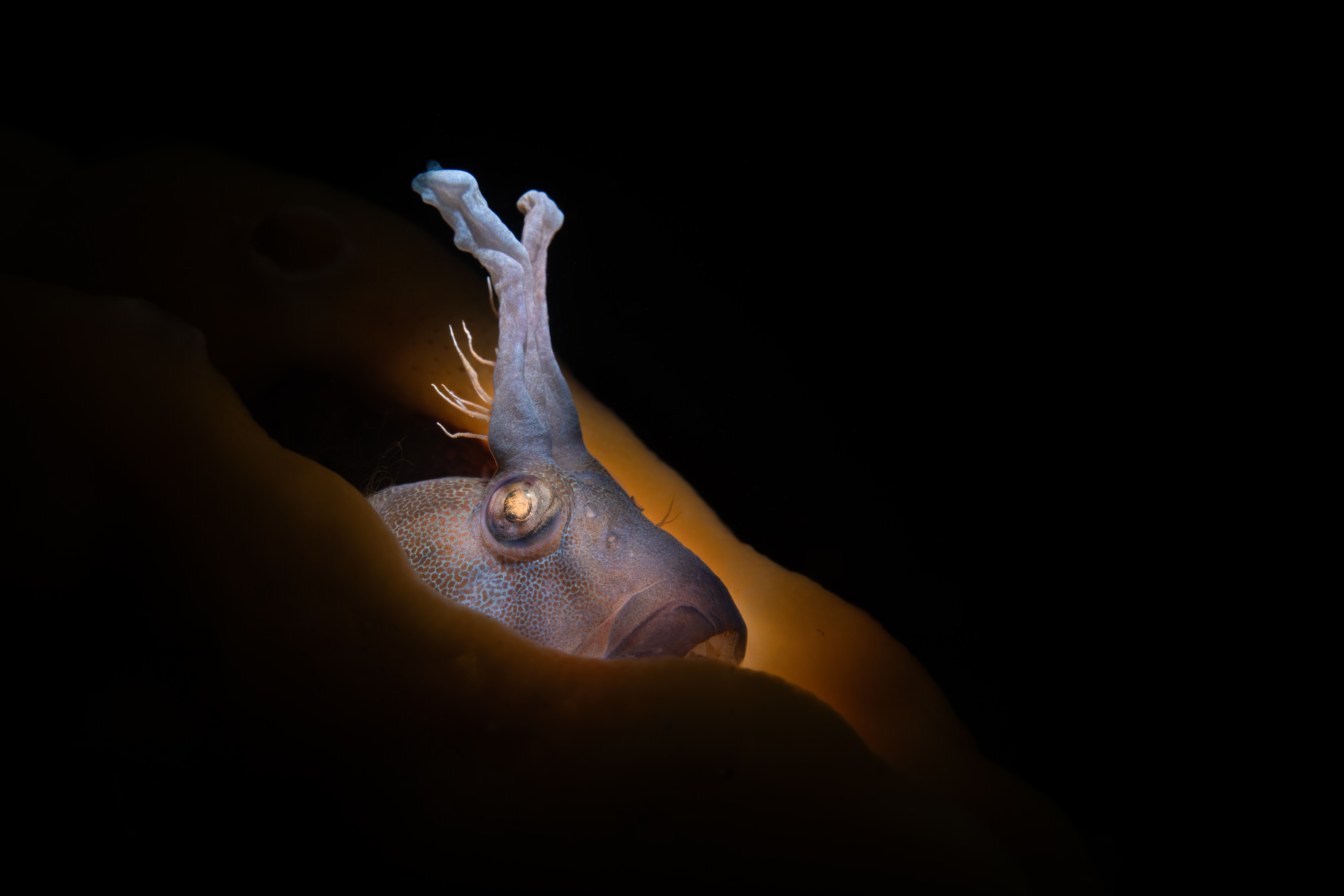
Sony A1 & FE 90mm F2.8 Macro G OSS | 1/40 sec | f/11 | ISO 125
Camera Settings
When it comes to settings for macro photography, it’s hard to tell you that there is a golden rule, as like most things artistic, it’s subjective. There are however a few guidelines that will help you get good shots time and time again, but the longer you shoot underwater, the more you’ll find yourself wanting to bend the rules.
Aperture
Due to the tiny depth of field that macro lenses offer, you’ll often find yourself needing to shoot at a lot higher apertures than you’d be used to on land. I usually shoot around f/8 and above, which still gives plenty of beautiful bokeh but allows enough of the image to be in focus that you can get a good understanding of the subject. Keep in mind that these high apertures are another reason that strobes are so important, you’ll be cutting out a lot of light with the f-stop, so you’ll need to add it back in with strobes to keep your image well exposed.
Shutter Speed
This will depend on the creative effect that you are going for, but most of the time you’ll be limited on the high end to around 1/250-400 depending on your camera’s sync speed with the strobe and around 1/10 on the slow end to avoid unwanted motion blur. An exciting genre of underwater macro to master is the use of intentional blur with slow shutter speeds that can be nicely executed with strobes. The strobes freeze the motion at the moment that the flash fires, burning a crisp part of the shot into the frame, whilst the remainder of the exposure can be left to blur and trail light, creating a dreamy effect.
ISO
You’ll want to keep this nice and low to avoid any noisy images underwater, but to be honest a lot of modern camera sensors can shoot at very high ISO without too much of an issue. It’s worth looking up the native ISO of your exact body and aiming to shoot at that to make the most of the dynamic range that your camera offers.
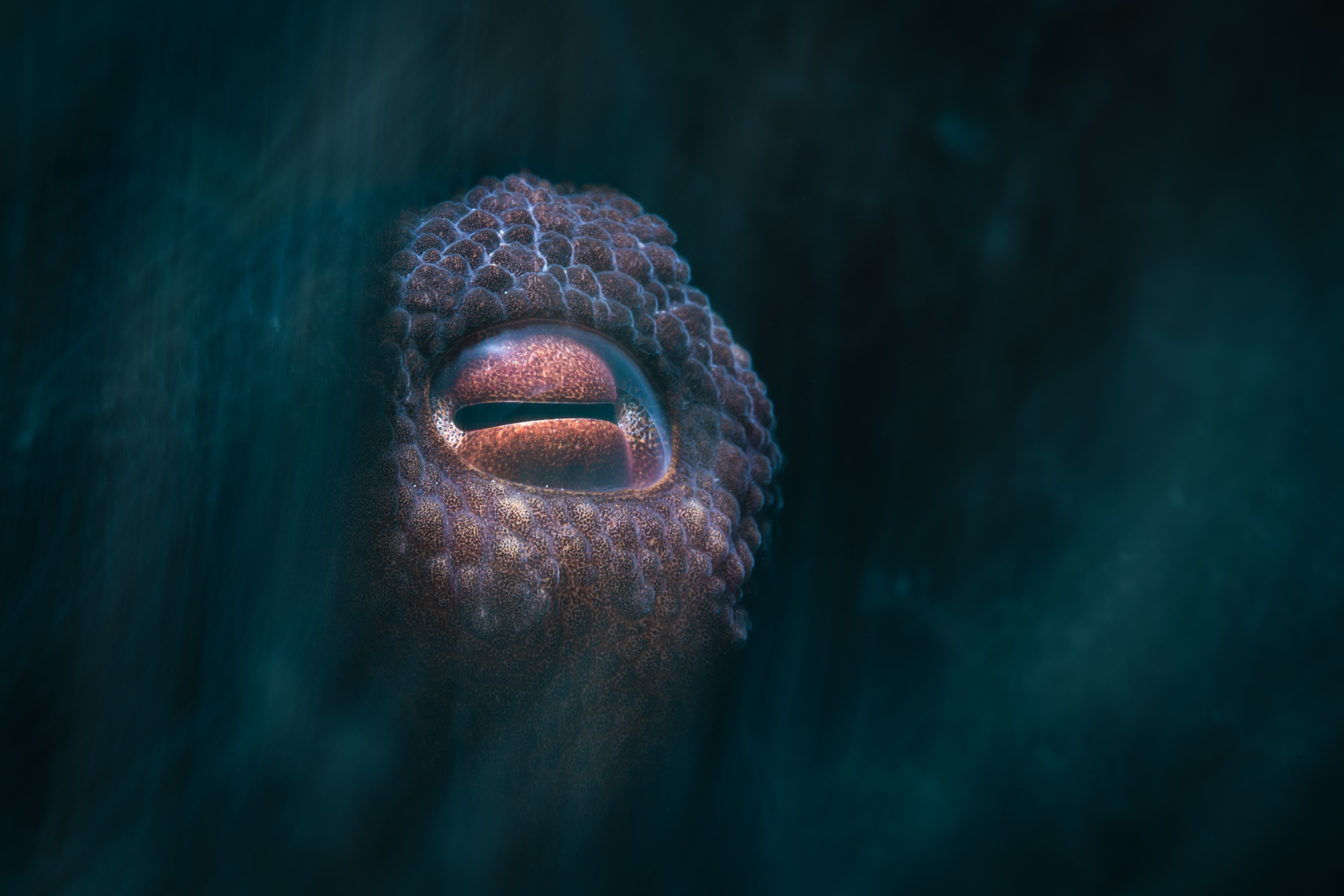
Sony A1 & FE 90mm F2.8 Macro G OSS | 1/2 sec | f/22 | ISO 125
Final Words
If you are to only take one bit of advice from this article away with you, then please let it be that wildlife photography is about four things:
Time spent in the field
Learning about your subjects
Familiarity with your gear
A little bit of luck
You can work on the first three with no worries at all with time and effort. Practice makes perfect rings true here so the more you dive the better you’re going to get. The last one however, well I’ll leave that one to you to figure out…
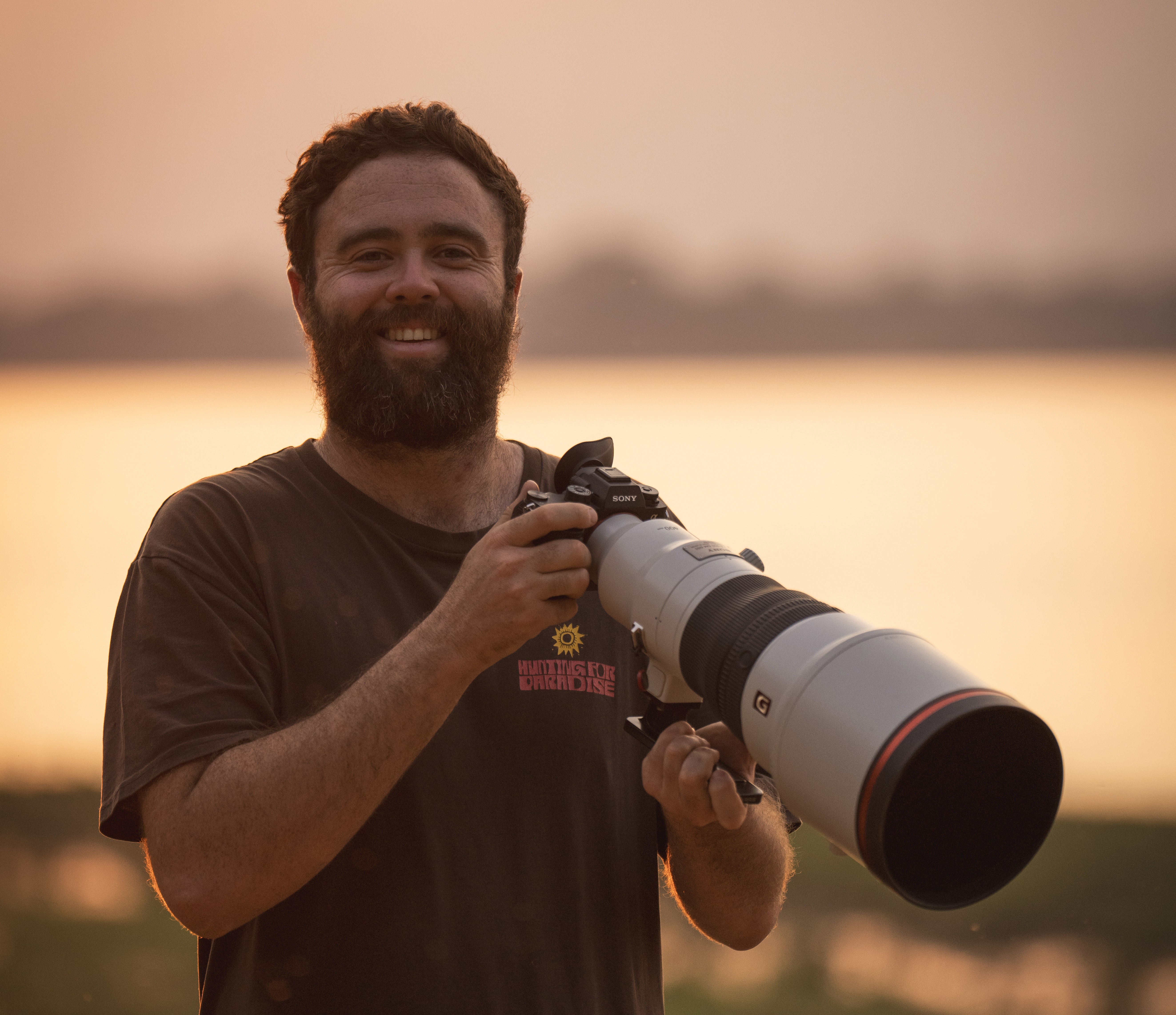
Lewis Burnett
Lewis Burnett is a wildlife tour guide and photographer based in Western Australia, whose work aims to connect people with the country’s most vulnerable environments. He has guided and photographed across regions including Kakadu, Ningaloo, the Red Centre, and WA’s South-West.
His imagery has earned international recognition, including the 2023 Australian Geographic Nature Photographer of the Year portfolio prize and the Sony Alpha Awards grand prize. Lewis works closely with NGOs and environmental groups, using photography to bridge art and science and help advocate for Australia’s wild places.


